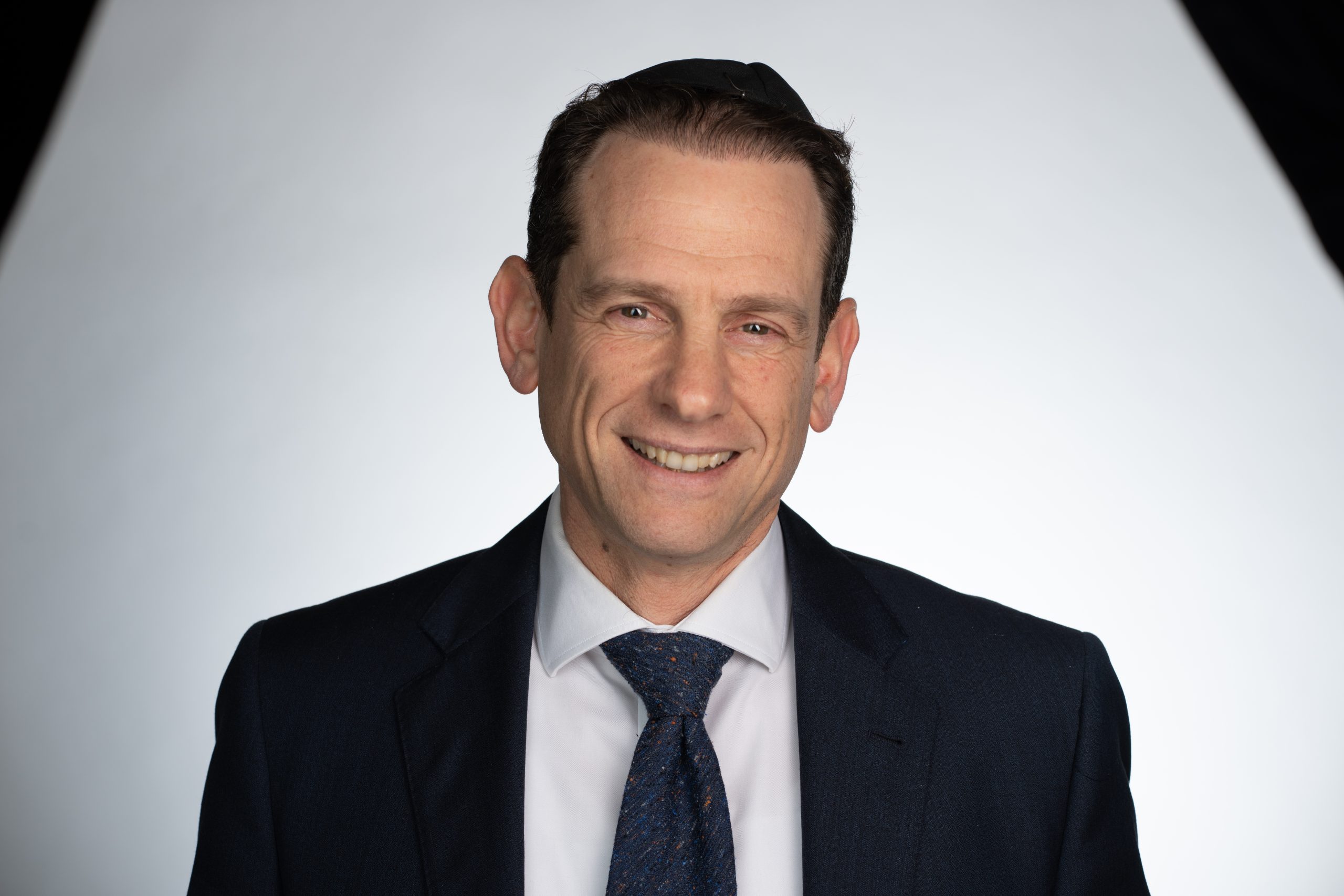
Thank you so much for your interest in my career. I hope these reflections are useful to ECP and everyone connected to it. I appreciate the thoughtful questions and will try to answer them to the best of my ability.
What is your job title, and what do you do?
How much does a title matter? It is somewhat ironic for me to ask that right now, since I was just named CEO of the OU, and I appreciate the gift of that title. But my own career has never followed one straight path. At different points, I worked at a hedge fund, served as a community rabbi, led the Orthodox Caucus, and then spent 16 years in a variety of roles at Yeshiva University before coming to the OU. Each role looked different and carried a different title, but each one gave me experiences, relationships, and skills that helped prepare me for what came next.
That is why I have been asking myself: What is the shift from one title to the next? Does your job description change? Does your approach change? Does your demeanor or perspective change?
I often think that the role of a senior leader begins with people (although I believe that focus is important at every level) and ends with vision and mission. The work is to align people around their values and performance; create a strong culture; build strategies and plans that move toward a shared vision; and do everything in your power to accomplish the organization’s mission. That includes delegating and surrounding yourself with great people – which, of course, brings us back to people.
When you have a senior role, that is your responsibility – your achrayus. You must ensure that people are doing what they need to do while creating accountability, encouraging growth and creativity, and developing others, yourself, and the organization as a whole.
What is one piece of advice you wish someone had given you earlier in your career?
So many! One key approach to take is to always be curious, always be learning. The best way to ensure you do is to stay humble, listen and learn.
One piece of advice is that a career does not always develop in a straight line, and it is not only about choosing a field. It is also about choosing the people with whom you will work.
Looking back at my own path, from finance to the rabbinate, Jewish communal work, higher education, and now the OU – the positions may appear very different from one another. But the skills, experiences, and relationships I gained at each stage became part of the next one. I’m not sure I could have mapped out that progression when I was starting, and I’m not sure I needed to.
You might think, “I want to go into banking,” without realizing how many different paths exist within that field. Starting at a smaller organization, where you can work with people who will mentor you, care about you, and give you greater opportunities, might be better than going to the place with the biggest name.
It is not only about “choosing” a career. It is about gaining the skills, experiences, and investment from mentors, peers, and others that will enable you to grow, and remaining open to where those experiences might lead you. Again, it comes back to people.
Why do you find ECP meaningful?
We have heard from so many young professionals, both married and single, who felt that they had been cared for in specific ways across so many different parts of their lives. They were not entitled to that support, they were appreciative of it.
ECP gives us an opportunity to engage a particular group of people with a distinct and evolving set of needs that are different from what they had at an earlier stage of life. It is unbelievable that we have the opportunity to recognize a gap, identify a need, and try to fill it with meaningful, uplifting, spiritually and religiously engaging content, experiences, and relationships.
Is there something you would do differently if you were starting out again?
That is a really hard question. I don’t really have regrets, because I am the person I am today because of all my experiences, especially the failures and mistakes.
Baruch Hashem, I was given the opportunity and encouragement, both during and after college, to invest in experiences and in my own growth. I was able to spend many years learning in yeshiva and was given the space to slip up, fail, and learn from those experiences.
So, I’m not sure there is something I would do differently. I might have liked a little less pain along the way, but I don’t know. Sometimes the most painful moments are the ones from which we learn the most.
What is one resource, book, habit, or person that has shaped how you work?
I have lists of books and am always happy to provide them. But if I had to name one book, it would be the Torah. Continuing to learn and having something you engage with every day is incredibly important. It could be Daf Yomi, Nach Yomi, Halacha Yomi, Mishnah Yomi, or Shnayim Mikra. If I had to choose one resource or habit, it would be learning Torah daily, even if it is for only two, five, or ten minutes.
If I had to choose a person, I would begin with my parents: my father, zichrono livracha, and yibadel l’chaim, my mother. Another very significant mentor in my life was President Richard Joel at Yeshiva University. They all had a tremendous impact on me, how I work, and where I work. But there have been so many others that I would be remiss to list only those three.
What is something about your job that most people outside the field would not guess?
When people think about nonprofit work, they often define it primarily through the lens of the IRS revenue code: “nonprofit.” In reality, there is an incredible focus on revenue, expenses, and professionalism. But above all, this is a for-purpose field, designed and focused on achieving what our board, our history, and the needs of the community guide us to accomplish.
I think the corporate world, the medical field, the legal profession, and many other fields have a great deal to learn from the nonprofit (or for-purpose) world. I am not sure people fully appreciate the lessons and gifts this field has to offer.
At the OU in particular, people often think of Kashrus and the OU Kosher symbol. They may not realize the extraordinary range of work we do through ECP, NCSY, JLIC, Yachad, All Torah, Anglo Engagement, the Women’s Initiative, and so many other programs. I don’t think most people fully appreciate the breadth of the OU’s impact.